Dense, misty coniferous forest with tall trees and lush undergrowth.

Every change you make is a bet on your uptime

Stag simulates change impact & blocks risk before deployment

[CHANGE RISK PREVENTION]

[Blast radius simulation]

Availability, security, performance, & Toil

Quiet changes lead to loud incidents

Outages often start as small changes.
A configuration tweak. A dependency update. A routine deploy.

By the time the problem shows up, it is already too late.

Teams lose hours tracing failures they did not expect. Evenings, weekends, and life moments disappear into incident response.

Most outages begin with a routine change.
Most teams only see the impact after production.

Stag prevents these incidents at the source. Before deployment.
[INTRODUCING STAG]

The first Change Risk Prevention Platform

Stag shows what a change will break before production. It builds a live model of your environment, simulates blast radius across services and shared components, and shows what will fail, what will be exposed, and why.

[01]

See what breaks

Simulates the deep ripple effects of changes before they break production.

[02]

See what gets exposed

Even seemingly safe changes can increase attack surface

[03]

See why

Little things bite you. Find them all. Stamp them out.

[USE CASES]

Where Stag fits into your work

Security inspection report with a verdict of UNSAFE and high criticality, highlighting plaintext transmission risk and showing corresponding AWS load balancer listener code.
Dashboard screen showing a system inspection flow with icons connected in a horizontal line; 'Route Broken' and 'Service Degraded' statuses are highlighted in orange.
Network security interface showing nodes labeled 'Subnet Exposed' and 'Instance Exposed' connected by lines on a grid background under Inspections tab.
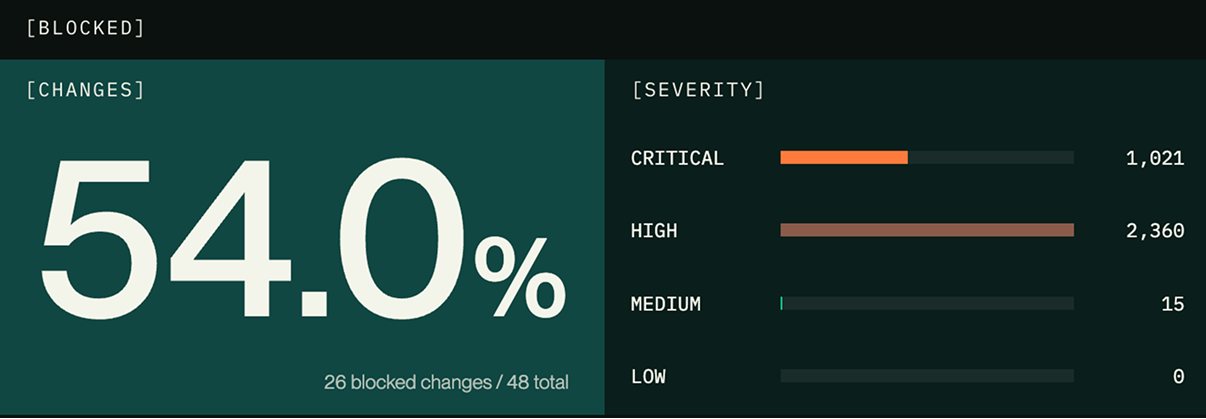
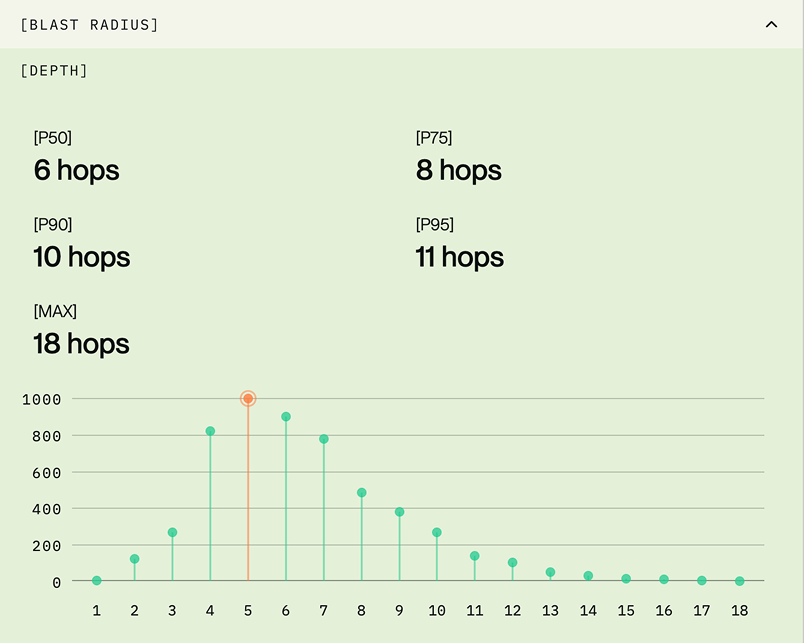
Dashboard showing 54% blocked changes, severity levels with counts, risk categories, blast radius depicting depth in hops, and inspection outcomes with 100% origin auto.
Dashboard showing database nodes count of 4,918 and storage nodes count of 12,144 with heatmaps detailing critical, high, and medium severity percentages and P99 blast radius distribution for categories like DB, Load Balancer, DNS, Network, IAM, K8S, and Storage.
Dense, misty coniferous forest with tall trees and lush undergrowth.

[01]

Fewer bad deploys

[02]

Faster reviews

[03]

Fewer incidents

[04]

Faster releases

[05]

Ship more, fix less

[BENEFITS]

Why teams love Stag

Stop observing. Start preventing.

Stag helps teams catch unsafe changes early, so they ship more and fix less.